

If you want to understand Ghana, start with the food.
I spent around three months living in Ghana, and food quickly became one of my favourite ways of getting to know the country. Not just what people eat, but where they eat it, when they eat it and the almost endless discussions about who makes the best version.
I ate in restaurants, small local chop bars, roadside stalls and markets. Sometimes I knew exactly what I was ordering. Other times I relied on pointing, asking questions and trusting whoever I was with.
And that’s part of the fun.
Ghanaian food is bold, filling, often spicy and much more varied than I’d expected. A lot of dishes combine a starch such as rice, cassava, maize or plantain with a soup, stew, fish or meat – but that’s only the starting point.
So, if you’re visiting Accra for the first time, what should you actually eat?
Here are 15 Ghanaian foods I’d recommend trying – including some that became personal favourites during my time here.
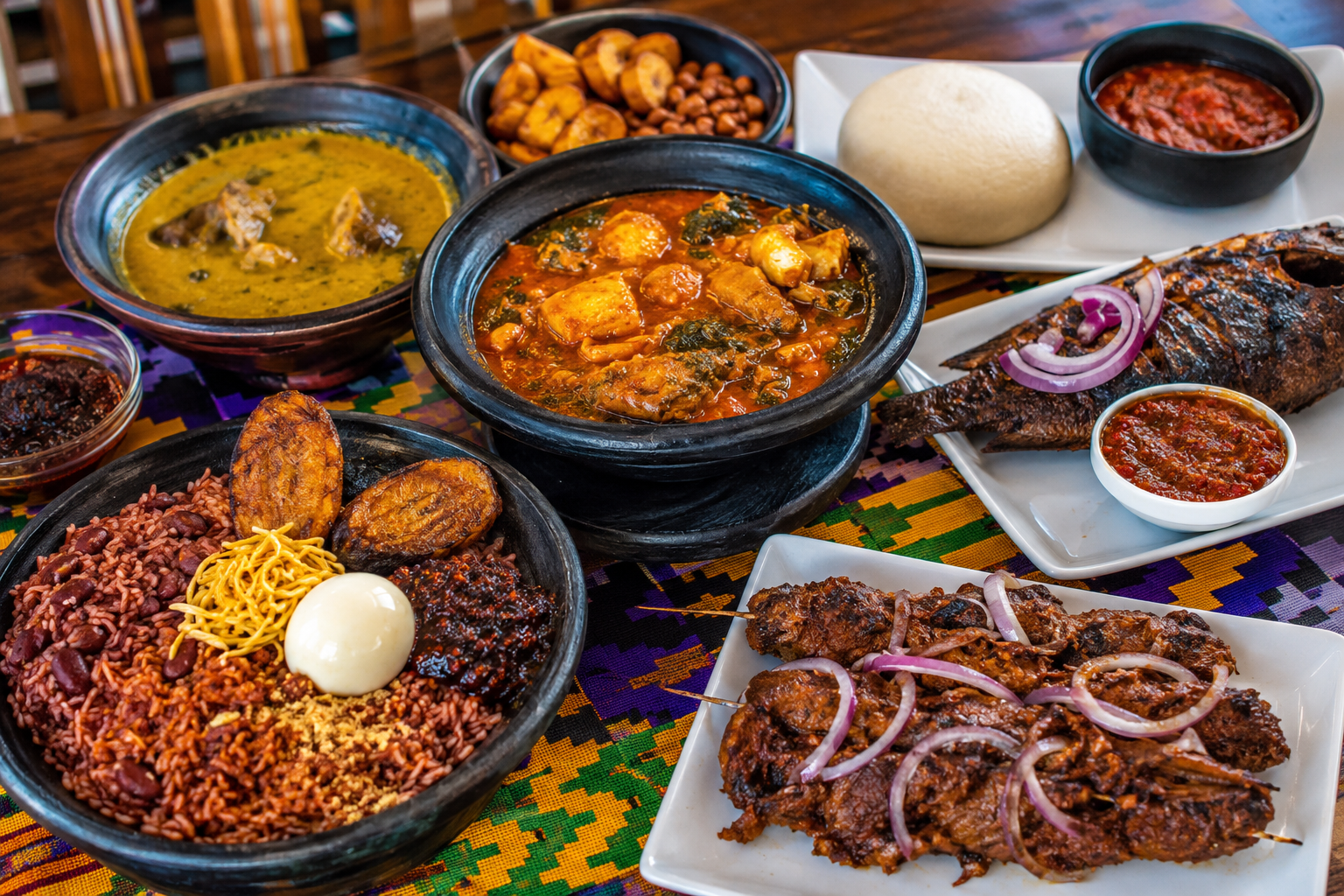
Let’s start with one of Ghana’s great institutions.
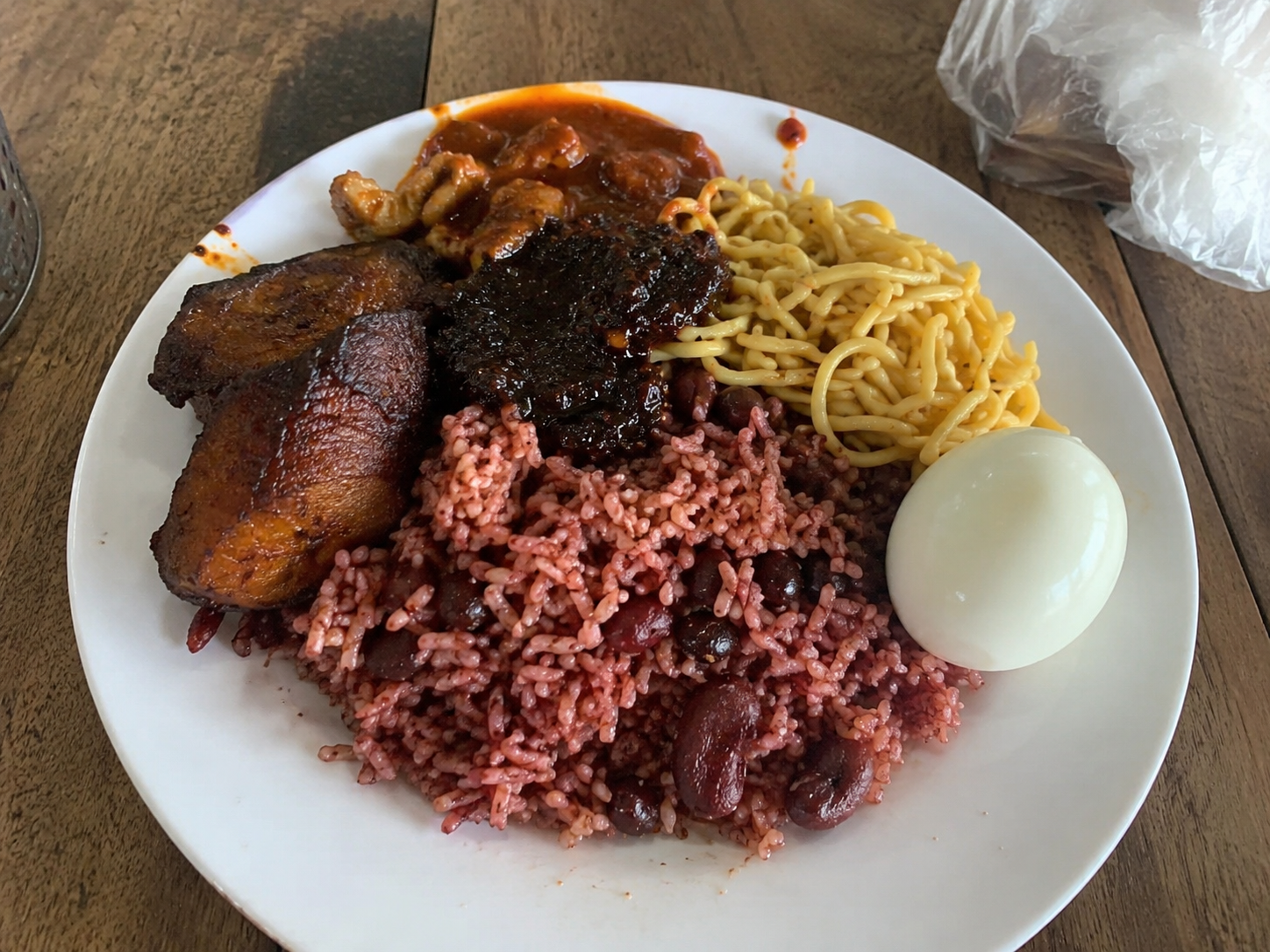
Waakye (roughly pronounced waa-chay) is rice and beans cooked together, traditionally with sorghum leaves that help give the rice its distinctive colour. It’s generally eaten for breakfast or lunch rather than dinner.
But describing waakye as “rice and beans” really doesn’t do it justice.
The fun comes from everything you add to it: spaghetti, gari, boiled egg, meat, fish, fried plantain, stew and – importantly – shito, Ghana’s dark, spicy pepper sauce.
One of the things I noticed while living in Accra was just how seriously people take their preferred waakye seller. Find a good one and you’ll see people queueing early – and some sellers are finished before lunchtime.
My tip: Don’t be shy with the extras. Waakye is at its best when there’s almost too much going on.
If I had to recommend one Ghanaian street snack to someone who’d just arrived, kelewele would probably be it.
It’s ripe plantain cut into chunks, seasoned with spices – commonly including ginger and chilli – and fried until it’s soft and sweet inside and caramelised around the edges. It’s often served with peanuts.
Sweet. Spicy. Salty. Slightly addictive.
It’s also particularly associated with evening street food, which is how I came to enjoy it most – freshly cooked from a roadside seller rather than sitting on a restaurant plate.
If you’re nervous about trying Ghanaian food for the first time, start here.
My verdict: 🌶️ One of the easiest Ghanaian foods to fall in love with.
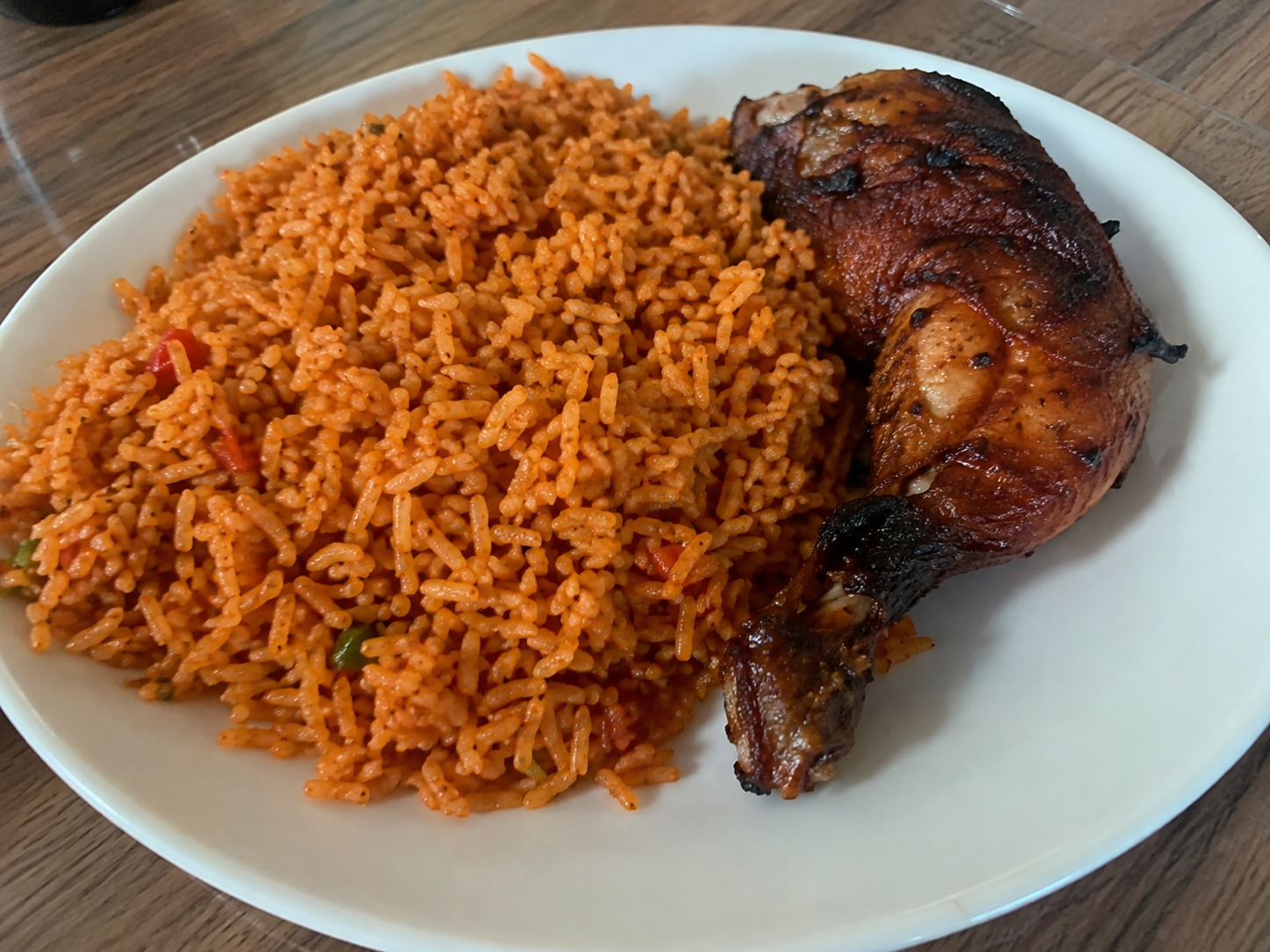
Ah, jollof.
At this point we should probably acknowledge the elephant in the room.
Ghana or Nigeria?
I’m not getting involved.
What I will say is that Ghanaian jollof became a regular part of my diet while living here.
The rice is cooked in a rich tomato-based sauce with peppers, onions and spices, giving it far more flavour than plain rice. It’s commonly served with chicken, fish or meat and salad.
You’ll encounter jollof everywhere: restaurants, parties, street-food spots, family meals and celebrations.
It’s also an ideal starting point if you’ve only just arrived in Ghana because it’s recognisable enough not to feel intimidating while still giving you a proper introduction to Ghanaian flavours.
My tip: Try it with grilled chicken and shito.
This was one of the dishes that surprised me most.
Red Red is essentially a rich bean stew, usually made with black-eyed peas and red palm oil, typically served alongside fried ripe plantain.
That description doesn’t make it sound particularly exciting.
It is.
The creamy, savoury beans against the sweet fried plantain just works.
It’s also one of the easier options to look for if you don’t eat meat, although don’t automatically assume a particular Red Red is vegetarian or vegan – always ask how the stew has been prepared.
Best for: 🥬 Vegetarians, plantain lovers and anyone wanting a filling Ghanaian lunch.
Now we’re getting properly Ghanaian.
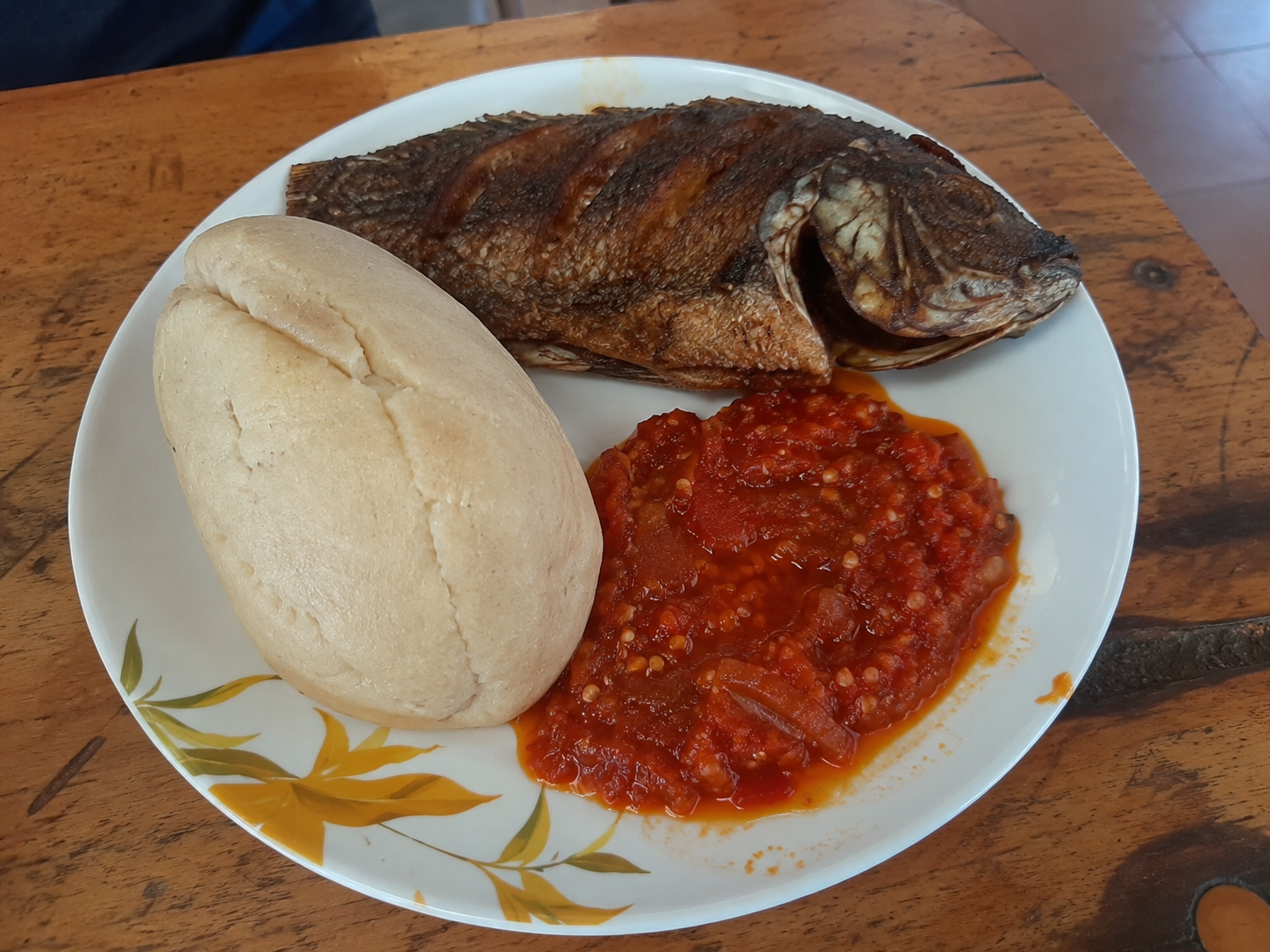
Banku is made using fermented corn and cassava dough, which gives it a smooth texture and slightly sour flavour. A classic combination is banku with grilled tilapia and hot pepper sauce.
This was one of the meals where eating with my hands made much more sense than attempting to tackle it with cutlery.
Take some banku with your right hand, use it to pick up some pepper or sauce, add some fish and eat.
The combination of smoky fish, sour banku and fiery pepper is excellent.
First-timer warning: 🌶️ Ask about the pepper before enthusiastically loading up your first mouthful.
Kenkey was more of an acquired taste for me.
Like banku, it’s made from fermented maize, but it’s firmer, with a distinctive sour flavour. It’s traditionally steamed wrapped in maize husks and commonly eaten with fried fish, pepper and shito.
It’s particularly important in the food culture of coastal Ghana and Accra.
This is one I’d recommend trying even if you don’t immediately love it.
Part of travelling is eating things that aren’t designed around your own palate – and kenkey is a proper taste of everyday Ghana rather than something created for tourists.
You can’t really write an article about Ghanaian food without fufu.
Fufu is generally made by pounding cassava with plantain or yam until it develops its famous smooth, stretchy consistency. It’s then served sitting in a bowl of soup – often light soup, groundnut soup or palm nut soup.
And there’s a technique.
Use your right hand to pinch off some fufu, make a small indentation, scoop up some soup and eat it.
Traditionally, you’re not supposed to spend ages chewing it.
I won’t pretend I mastered that immediately.
Watching someone who has eaten fufu all their life versus a first-time visitor is quite entertaining.
Best for: Someone wanting a genuinely traditional Ghanaian food experience.
This is another brilliant entry point into Ghanaian street food.
Chinchinga is Ghana’s answer to the kebab – pieces of meat grilled over charcoal and coated in a spicy seasoning.
You’ll see grills smoking away by roadsides, particularly as the day cools down and Accra moves into evening.
It’s simple food, but when it’s freshly grilled, smoky and covered in spice, it’s fantastic.
This is exactly the sort of food that’s easy to walk straight past if you don’t know what you’re looking for.
And that’s one reason we include local street-food experiences on our Kofi Culture Street Food Safari – some of Accra’s most memorable food doesn’t come with a restaurant sign or TripAdvisor page.
Accra introduces you to food from all over Ghana, and Tuo Zaafi – usually shortened to TZ – gives you a taste of northern Ghana.
It’s a smooth maize or millet-based staple traditionally eaten with soup, including green leafy soups. Ghana’s National Commission on Culture identifies Tuo Zaafi as particularly representative of northern Ghanaian cooking.
This is where exploring Ghanaian food gets particularly interesting.
There isn’t really one single “Ghanaian cuisine”. Food changes as you move between the coast, Ashanti areas, Volta Region and northern Ghana.
So even if you’re staying entirely in Accra, you can eat your way around much of the country.
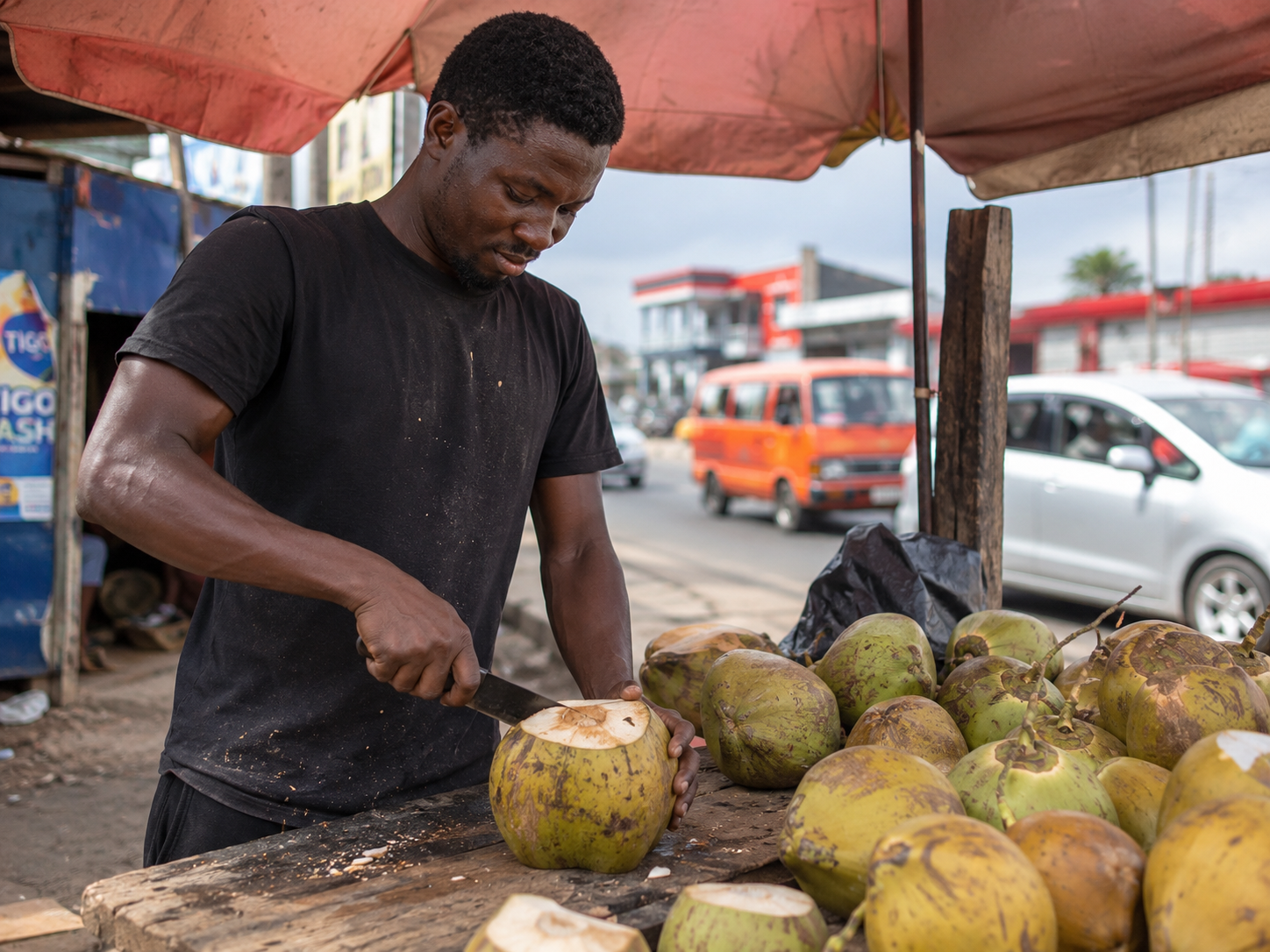
Okay, technically this isn’t a “dish”.
But I couldn’t leave it out.
One of the simplest pleasures of living in Ghana was buying a fresh coconut from a roadside seller.
They’ll slice the top off with a machete so you can drink the coconut water, then – if you want – cut it open so you can eat the fresh flesh inside.
Cold coconut water on a hot Accra afternoon takes some beating.
🥥 Don’t leave Ghana without having one.
If you’re only in Accra for a few days, trying all 15 might be ambitious.
For a first visit, I’d start with:
| If you like… | Try… |
|---|---|
| Rice dishes | 🍚 Jollof |
| Big breakfasts | 🍛 Waakye |
| Sweet & spicy food | 🍌 Kelewele |
| Fish | 🐟 Banku & tilapia |
| Vegetarian food | 🌱 Red Red |
| BBQ / grilled meat | 🍢 Chinchinga |
| Soups | 🥣 Fufu & groundnut soup |
| Trying something very traditional | 🇬🇭 Kenkey & fish |
My personal first-timer combination would probably be waakye, kelewele, jollof, Red Red and banku with tilapia.
Then get more adventurous.
It can be.
Pepper is a serious business in Ghana.
Fresh pepper sauces and shito accompany many meals, and what someone locally describes as “a little spicy” can have considerably more kick than some visitors expect.
But don’t let that put you off.
You can often control how much pepper or shito you add, and plenty of Ghanaian dishes aren’t overwhelmingly hot.
My advice is simple:
Start cautiously. You can always add more.
I learnt that lesson the hard way.
So even if you’re staying entirely in Accra, you can eat your way around much of the country.
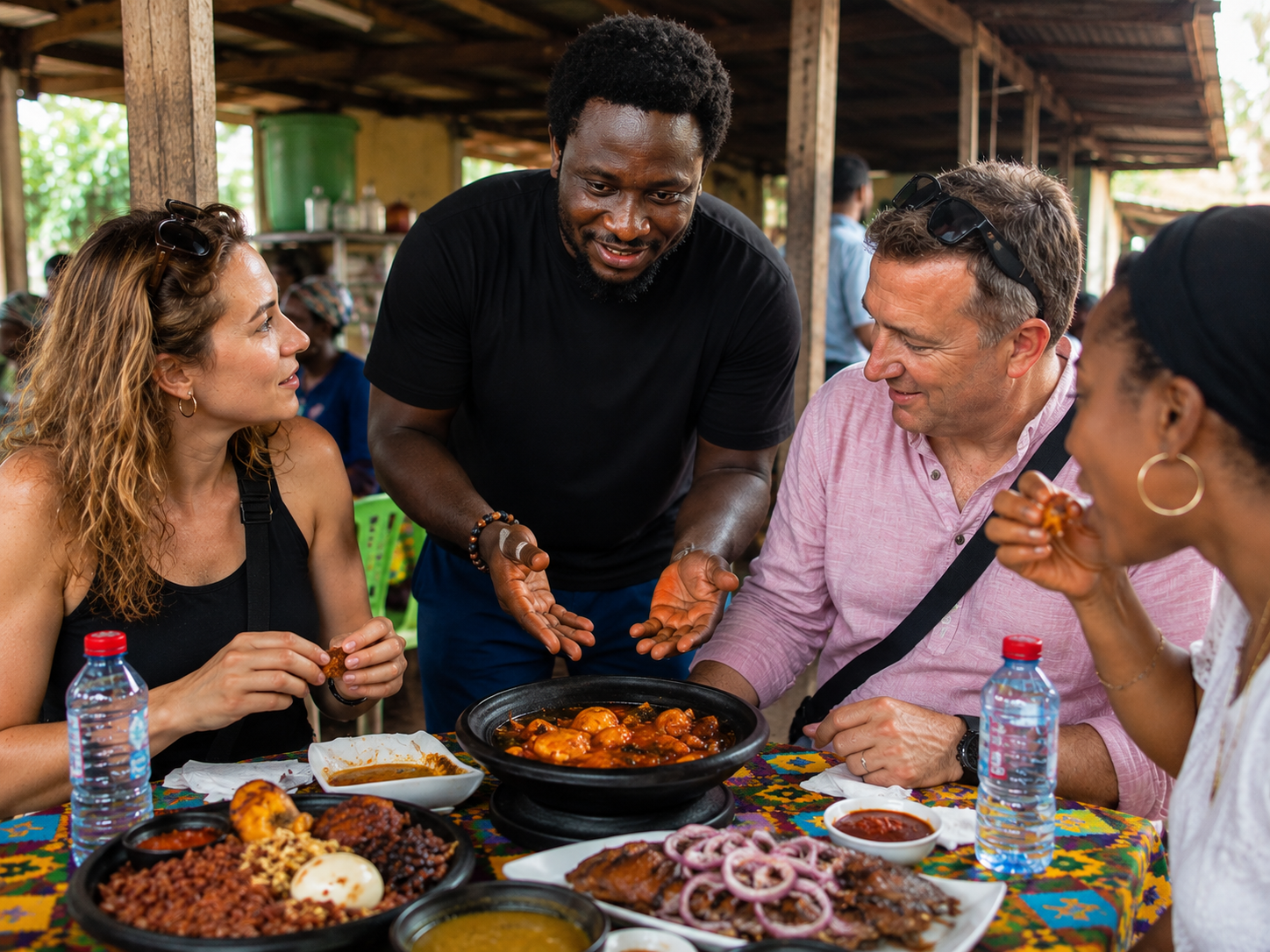
This is exactly why we created the Kofi Culture Accra Street Food Safari.
Rather than taking you from one tourist restaurant to another, the idea is to experience the food in the places where Accra actually eats.
You’ll explore local neighbourhoods, meet vendors, learn what you’re eating and try Ghanaian flavours you might otherwise walk straight past.
And you don’t need to know what to order.
That’s our job.
👉 Explore the Kofi Culture Accra Street Food Safari
Come hungry.
Jollof rice, fufu, waakye, banku, kenkey and Red Red are among Ghana’s best-known foods. Which one is considered the Ghanaian dish depends very much on who you ask – and where in Ghana they’re from.
For a first-time visitor, jollof rice, waakye, kelewele and Red Red are very approachable. Banku with tilapia is a great next step before trying foods such as fufu and kenkey.
Some of it can be, particularly the fresh pepper sauces and shito served alongside meals. You can often control how much you add, so start with a small amount if you’re not used to chilli.
Yes. Red Red is an obvious place to start, alongside plantain, yam and various vegetable-based dishes. However, always ask whether meat, fish or fish-based ingredients have been used in a stew or sauce.
Kelewele and chinchinga are two excellent options for first-time visitors. Waakye is another essential experience, particularly earlier in the day.
Yes, but use sensible precautions. Look for popular vendors with high turnover and food being prepared fresh and served hot. Exploring with someone who knows the area can make it easier to find established local favourites.
Some dishes, particularly fufu, banku and kenkey, are traditionally eaten with the right hand. Other dishes such as jollof and waakye are normally eaten with cutlery.
I arrived in Ghana knowing some of the famous names – jollof, fufu, plantain – but three months of living here gave me a very different appreciation of Ghanaian food.
It wasn’t necessarily the smartest restaurant meal that I remembered.
It was discovering a great roadside seller. Eating something I’d never heard of. Watching someone prepare food in front of me. Being corrected on how I was eating it. Or having a Ghanaian friend insist that their favourite waakye place was obviously the best one in Accra.
That’s the side of Ghana we want people to experience through Kofi Culture.
So come to Accra.
See the sights.
But make sure you taste it too.